

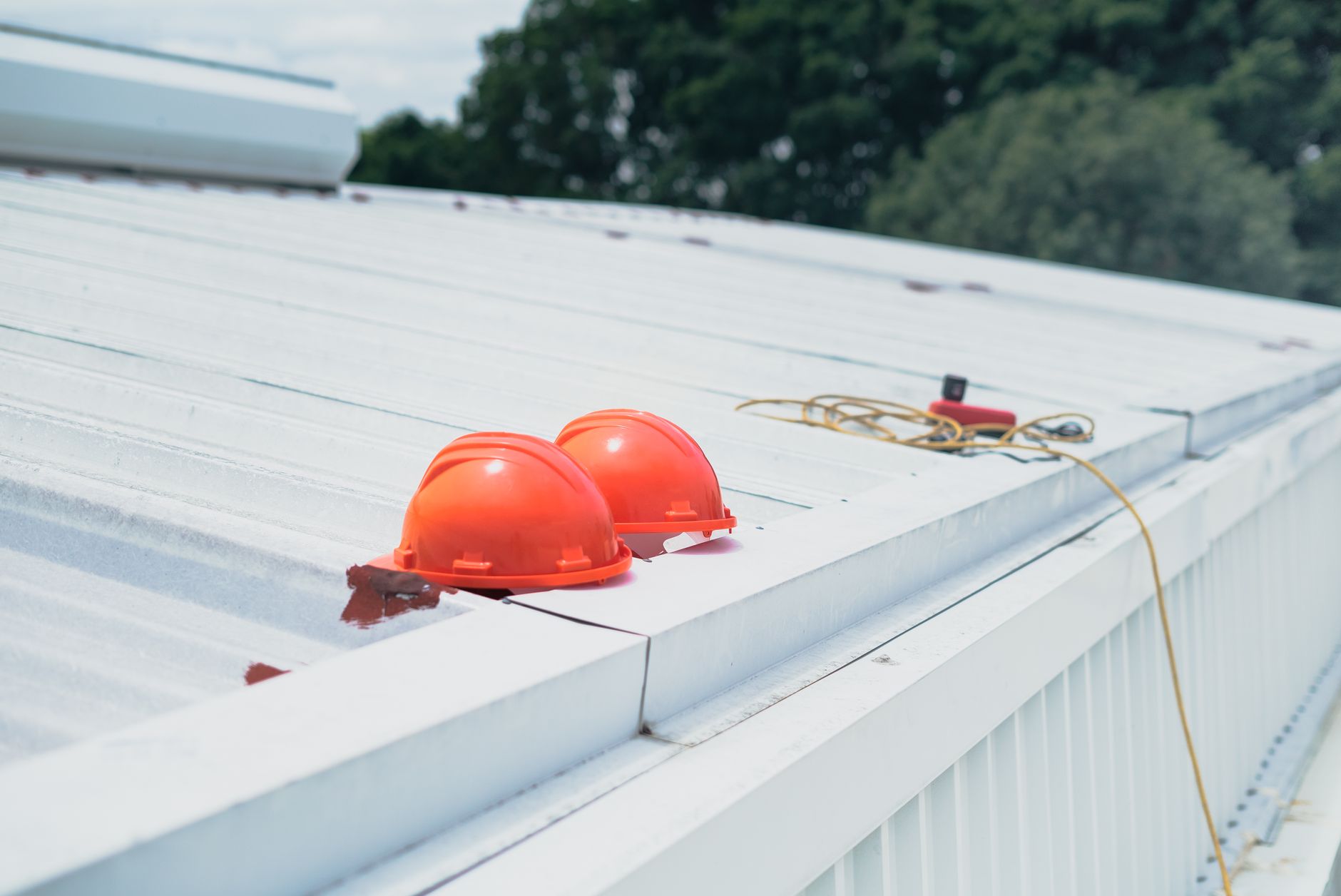
Coordinating gutters and roof replacement begins before either crew starts work. The roofer and gutter installer should agree on roof-edge details, removal or protection of existing gutters, fascia repairs, and the sequence for final installation. Replacing the roof does not automatically mean the gutters must also be replaced.
The best starting point is a shared inspection and a written division of responsibilities. That gives homeowners a way to resolve gaps before the roof edge is opened up.
Assess the existing gutters before choosing the schedule
Look at the gutter body's condition, joints, attachment points, and drainage performance. A system in good condition may be reusable if it can be protected or removed without unacceptable damage and still suits the finished roof.
Replacement may be more appropriate when gutters are distorted, repeatedly leak, drain poorly, or no longer fit the roof edge. Age alone is not the only deciding factor.
Southwest Seamless Rain Gutters offers gutter repair and replacement services in Arizona and Southern Nevada. A gutter assessment can help establish whether the scope should involve protection, reinstallation, selective repair, or a new layout.
Agree on the roof-to-gutter transition
The finished roof must shed water into the intended collection system. Drip edges, gutter aprons where applicable, underlayment, and wall flashing all influence that path.
Ask the roofer to explain the edge detail required by the roofing product and applicable local requirements. Ask the gutter installer how the proposed gutter position works with that detail. Neither crew should have to guess what the other will leave behind.
Where a sloped roof ends against a wall, kick-out flashing may be a critical part of directing water away from the wall. PNNL's Building America guidance describes kick-out flashing as a component that diverts roof-wall runoff into the gutter. A larger gutter does not substitute for a properly integrated roof-wall detail.
Assign removal and protection responsibilities
Existing gutters can be damaged by tear-off debris, ladders, staging, or disposal equipment. The project agreement should identify who protects them and who is responsible if damage occurs.
If removal is necessary, establish:
- Who removes and stores the existing components.
- Whether reinstallation is included in the price.
- What condition would make reuse impractical.
- Who disposes of components that cannot be reused.
- How the property will handle rain while gutters are absent.
Temporary drainage deserves attention even in a dry climate. Scheduling around a favorable forecast helps, but it is not a complete plan for an unexpected storm.
Repair mounting surfaces before final installation
Roof work may reveal damaged fascia, failing edge materials, or earlier moisture problems. Addressing those conditions before installing gutters reduces the chance of disturbing new work later.
Decide in advance who can perform these repairs and how additional work will be priced and approved. If painting is required, confirm whether it happens before gutter attachment or requires a later coordinated visit.
The sequence often involves roof-edge preparation and repairs before final gutter fitting, but it is not identical for every assembly. Some integrated details require the trades to work together at a particular stage. The installation method and product instructions should determine the sequence.
Recheck drainage when the roof changes
A replacement roof can alter edge projection, runoff delivery, or the way water reaches a valley outlet. A change of roofing material can also affect compatibility with gutter components.
Do not assume the old outlet locations are automatically suitable. Use the project as an opportunity to review water that previously crossed entries, stained walls, or eroded a side yard.
For a hypothetical home with an upper roof draining onto a small lower roof, replacing both roof surfaces may leave the same concentration problem unless the collection layout is reconsidered. The decision should address the path of water, not just the appearance of new materials.
Homeowners planning new runs can review seamless gutter installation options while coordinating the roof scope.
Complete one coordinated closeout
Before making the final payment required by the agreement, review the work against each contractor's scope. Confirm the gutter-to-roof relationship, secure attachment, clear outlets, and intended ground discharge.
Keep photographs and separate warranty documents. Ask each contractor how to report a leak near the roof edge so responsibility can be investigated without delay.
Use a shared scope to avoid gaps between trades
Ask the roofer and gutter installer to review the same roof-edge photographs or marked elevations. Identify where a gutter will be retained, where it will be removed, and where an edge or wall detail requires coordination. A shared reference reduces the chance that both crews assume the other is handling a connection.
The written scope should assign responsibility for temporary removal, concealed damage, painting, final fitting, and cleanup. If one task depends on another being finished first, identify who confirms that the area is ready. This is especially useful when the contractors are booked on different days.
For a hypothetical house receiving new roofing and fascia repairs, the gutter crew may need the repaired mounting surface completed before taking final measurements. Scheduling fabrication from an earlier assumption could create avoidable adjustments. The useful question is what must be confirmed before each crew commits to the next stage.
Protect the finished work during the handoff
When the roofer finishes the relevant edge work, photograph its condition before gutter installation begins. This record can help clarify later questions without assuming that a stain or scratch identifies which trade caused it.
Confirm that roof debris has been removed from retained gutters and outlets. A system that worked before the project may develop a blockage during construction, so the closeout should address its condition rather than just whether it remains attached.
If gutters are being reused, agree on how any newly discovered damage will be handled. The decision should consider the component's condition and fit with the finished roof, not only the original intention to save it. Obtain approval before substituting new components or changing visible finishes.
Once both trades are finished, compare the result with the shared scope. Check that agreed downspout positions were retained or approved changes were recorded. Keep the final roof specification and gutter details together so future maintenance does not treat the two systems as unrelated.
After the next suitable rainfall, document any unexpected water path from a safe ground-level position. Send the location and photographs to the agreed contact so the roof edge and collection system can be evaluated together. A coordinated investigation is more useful than assuming every eave leak belongs to one trade.
Roof replacement questions
Do gutters always come off during reroofing?
No. The roof assembly, gutter attachment, access needs, and scope determine whether removal is necessary.
Should new gutters always go on last?
Often they follow roof-edge work, but integrated systems may require earlier coordination. Agree on the sequence before either installation.
Can new gutters correct faulty flashing?
No. Gutters collect runoff; flashing manages water at roof and wall transitions. Each component needs to perform its own job.
