

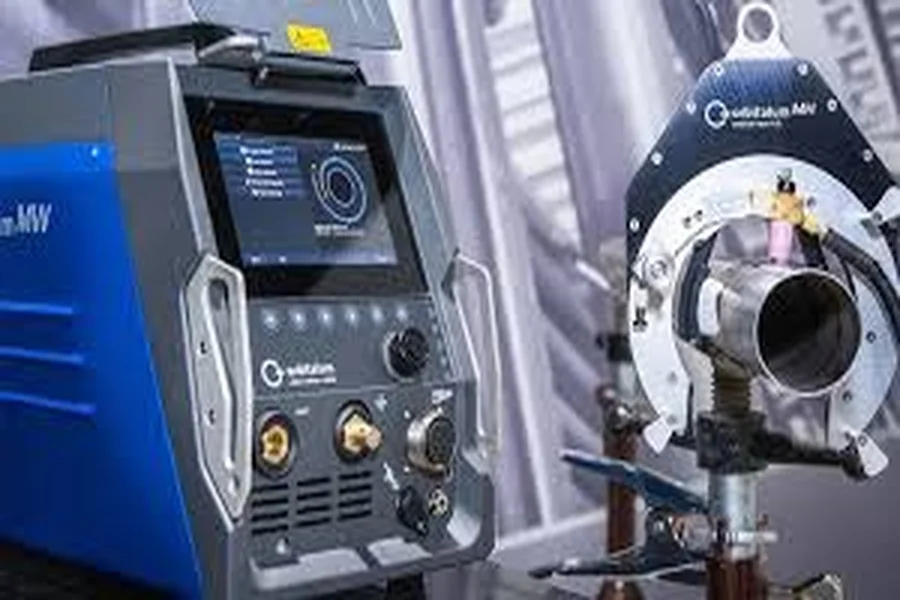
For industries where the tiniest welding imperfection can result in contamination, malfunctions, or operational shutdowns, orbital welders are indispensable. These advanced tools deliver unmatched consistency, precision, and reliability, making them a crucial asset in sectors like aerospace, pharmaceuticals, semiconductors, and food processing. With increasing standards for safety, sanitation, and efficiency, orbital welding remains a go-to solution for precision-based and automated welding needs.
What Makes Orbital Welders Unique?
Orbital welders are highly specialized machines designed for TIG (Tungsten Inert Gas) welding. They operate by rotating an electrode around a stationary component such as a pipe or tube, ensuring uniformity throughout the welding process. Unlike manual welding, where the output relies on the operator’s skill and steadiness, orbital welding is programmable and automated. This eliminates guesswork and ensures a clean, repeatable weld, essential for applications where precision and uniformity are critical.
Initially developed for the aerospace industry, orbital welding technology has since been adopted by other high-demand fields. By mitigating factors like uneven torch angles or inconsistent travel speeds—common in manual welding—this technology improves weld quality and reliability. With settings for parameters like arc length, travel speed, current flow, and shielding gas, orbital welders offer unparalleled control and adaptability for intricate and demanding applications.
The Role of Orbital Welding in Today’s Industries
Industries that prioritize hygiene, structural durability, and contamination control highly benefit from orbital welding systems. For instance, in pharmaceutical manufacturing, each weld must be completely smooth and free of crevices to prevent bacteria buildup and ensure compatibility with clean-in-place (CIP) processes. Similarly, in semiconductor production, the tiniest particle resulting from poor welds can disrupt delicate chip manufacturing. Aerospace applications also demand precision; a single faulty weld in hydraulic or fuel lines can compromise an entire mission.
The automation that orbital welding offers addresses these strict demands by minimizing human error, thus guaranteeing consistency across projects. Additionally, automation reduces the time and resources spent on inspections and repairs, leading to greater efficiency and productivity. Despite its advanced capabilities, orbital welding can also provide long-term cost savings due to reduced material waste and faster project completions.
Applications and Strengths of Orbital Welding
Although often considered indispensable for cleanroom and high-purity applications, orbital welding is also essential in industries like nuclear power, food and beverage production, and industrial piping systems. For instance, in nuclear energy facilities, these welders are critical for creating code-compliant welds in hazardous or radioactive areas where manual operation isn’t feasible.
Orbital welders also excel in tight or confined spaces with their compact design, which allows for precision even in complex assemblies. Furthermore, they can work effectively with a wide variety of materials, such as stainless steel, titanium, Inconel, and other corrosion-resistant alloys. This versatility makes orbital welding a practical choice for a wide range of high-demand projects and challenging environments.
Choosing the Right Orbital Welding System
Selecting the most suitable orbital welding system depends on several factors. These include the material type, the diameter and wall thickness of the pipes or tubes involved, and the regulatory or cleanliness standards crucial to the application. Additionally, job site conditions, such as accessibility and portability requirements, should influence decisions about the weld head and power supply configurations.
How SEC Industrial Delivers Precision Welding Solutions
To meet the growing need for precision and efficiency in critical applications, orbital welding plays an increasingly significant role. Industries aiming to achieve flawless weld quality, adhere to stringent regulations, or streamline production processes often turn to specialized support. SEC Industrial provides comprehensive resources for companies seeking advanced welding solutions, offering a combination of state-of-the-art equipment and technical expertise to empower high-performance operations.
